
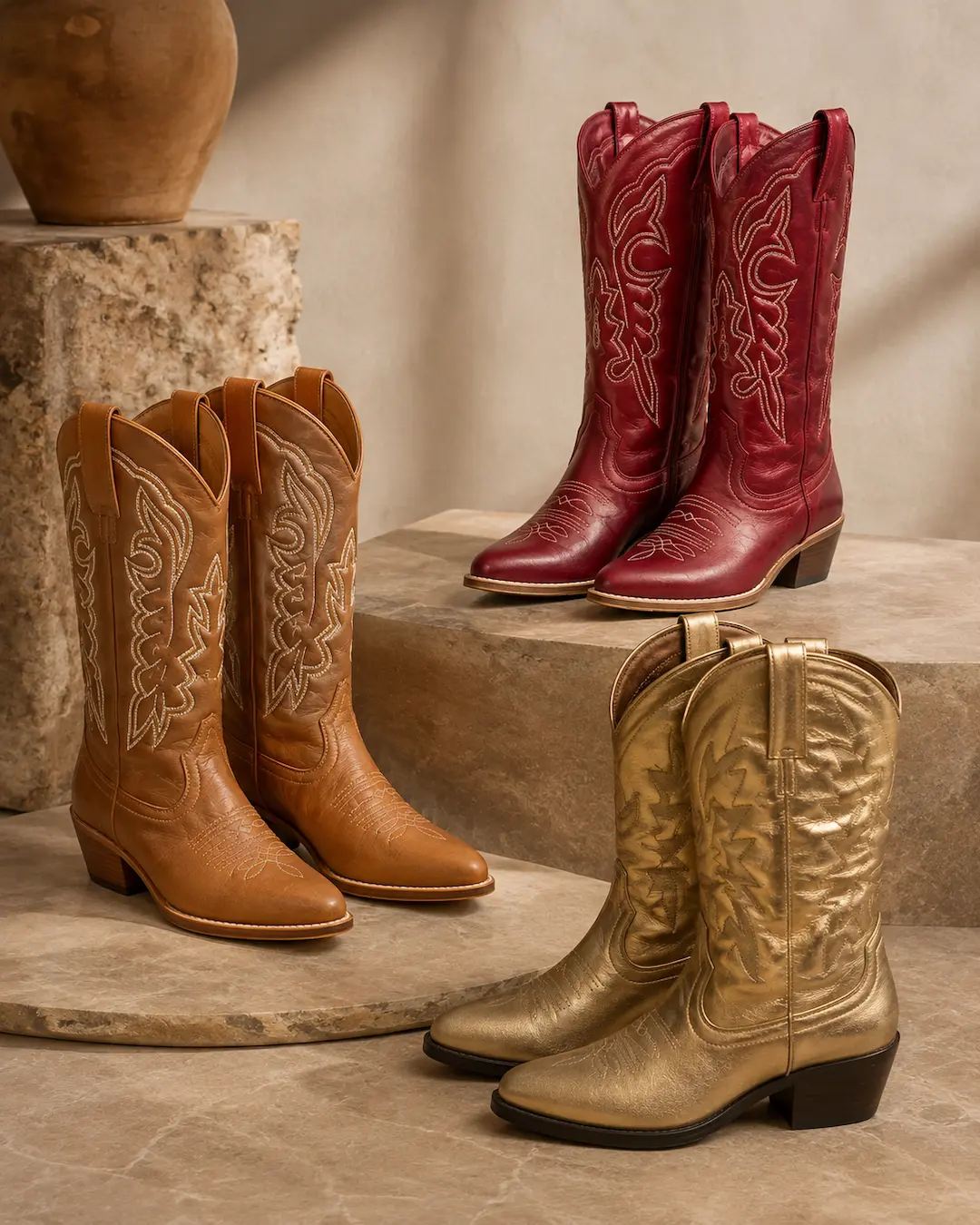
Leather is a natural material and reacts to its environment. In a humid, coastal climate the main risks are mould, salt residue and drying out from direct sun.
After each wear
- Wipe off dust and salt with a dry or barely damp cloth
- Use boot trees or loosely packed paper to hold the shape
- Let boots dry away from direct sunlight and never with a heater
Storage
Store boots somewhere ventilated rather than in a sealed plastic box or bag. Closed, damp storage is the most common cause of mould spots on leather in the tropics.
If mould appears
Wipe it off promptly with a dry cloth, let the boots air out completely, then condition the leather. Leaving it in place allows it to mark the surface.
Conditioning and polishing
Condition occasionally to replace oils lost to heat and cleaning, and use a thin, even layer rather than a heavy coat. Polish afterwards if you want a higher shine.
Rain
If boots get soaked, dry them slowly at room temperature and condition once fully dry. Rapid drying stiffens leather and can cause cracking.
Thinking about a new pair? Read <a href="/articles/how-to-choose-handmade-leather-boots">how to choose handmade leather boots</a>.