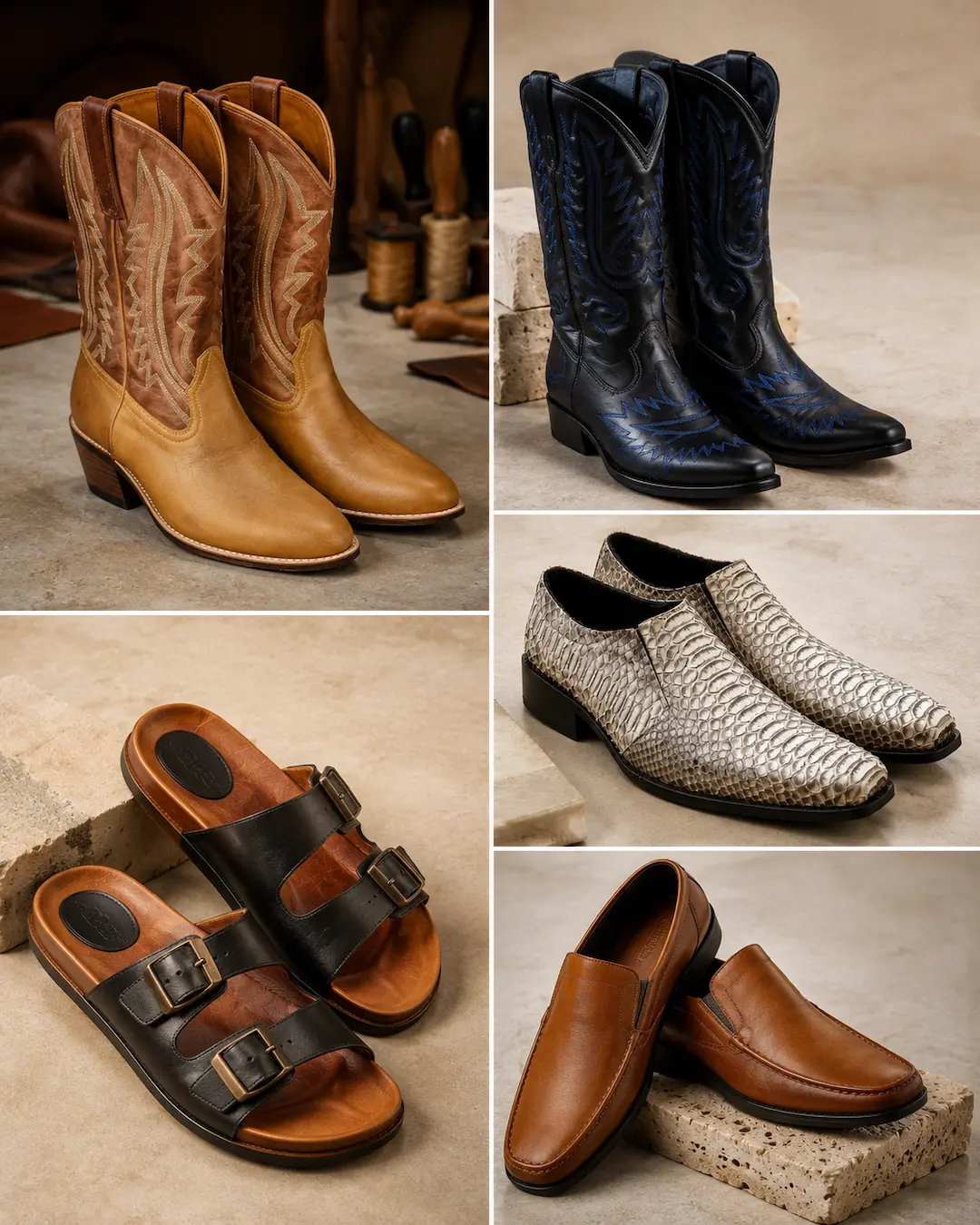
A good pair of boots should fit from the first wear and improve with use. When boots are made to order, most of the quality decisions happen before anything is cut.
Start with the leather
Full-grain leather keeps the natural surface of the hide and develops character over time. Softer, more supple hides feel comfortable immediately; firmer hides hold structure and support the shape of the boot for longer.
Colour and finish
Darker finishes hide scuffs and suit formal wear. Lighter and antiqued finishes show wear more openly, which many people prefer on a casual boot.
Last shape and toe profile
The last is the form the boot is built around. It controls the toe profile and the volume through the instep. A rounded toe generally offers more room, while a tapered toe reads sharper but needs accurate measurements.
Sole and heel
- Leather soles are traditional and slim, best for dry, formal use
- Rubber soles give more grip and handle rain and mixed surfaces
- Heel height changes both posture and how the boot looks with trousers
Fit points that matter
Check the heel hold, the width across the ball of the foot and the instep. A boot that slips slightly at the heel on a first fit can often be corrected during the adjustment stage.
Once your boots are made, keep them in good condition with our guide to <a href="/articles/leather-boots-care-tropical-climate">caring for leather in a tropical climate</a>.